









05-07 Oct. 2010
24-25 Apr. 2024
16-18 Apr. 2024
24-25 May. 2023
18-19 Apr. 2023
20-21 Apr. 2022
16-20 Jan. 2020
16-17 Jun. 2019
21-23 Nov. 2012
30-02 Dec. 2011
25-27 Oct. 2025
13-15 Oct. 2009
01-02 May. 2008

CHEMGO AG
Florenz-Strasse 9
4142 Muenchenstein
Switzerland
https://www.chemgo.ch/
CHEMGO SARL
1, rue Claude Chappe
69370 St Didier au Mont d‘Or
France
https://www.chemgo.fr/
Description
CHEMGO originated from the merger of Stehelin AG (established in the 1830s) and Chemgo Organica AG (established in 1976) in 2019. CHEMGO now contains a distribution and agency business. Since 2001, CHEMGO is a member of the London Pharma & Chemicals Group (www.lpc-grp.com), which has businesses and offices in several European countries.
The agency business contains the promotion and sales of a wide range of fine chemicals, mostly for synthesis applications in life sciences and related industries. This activity covers all of Europe, as CHEMGO represents partners in several European countries, India and the US.
CHEMGO’s distribution business services mostly specialty chemicals, analytical, environmental and medical laboratories with various products and equipment. The distribution business is focused on Switzerland.
CHEMGO has exclusive arrangements with leading partners in the corresponding fields and covers a wide range of products, equipment and services.
CHEMGO is SwissMedic audited, authorized for GDP (good distribution practice) and has a limited license to trade with controlled substances.
Remarks
Chemgo represents Sarex in all European countries for fine chemicals & pharmaceutical Intermediates.
The electronic product ROC-107 and all Triazine products are not covered by the Chemgo representation.















Ethylhexyl Triazone vs Octyl Methoxycinnamate: Which UVB Filter Should You Choose for Your Sunscreen Formula?
DateSep 23, 2026
Choosing a UVB filter can become a gamble, and the stress is understandable. You may be looking for a high SPF, a good skin feel, and stability of your formula. On top of this, there are ever-changing regulations to keep in mind. Below is a brief, jargon-free overview of the differences between ethylhexyl triazone and octyl methoxycinnamate.
...Choosing a UVB filter can become a gamble, and the stress is understandable. You may be looking for a high SPF, a good skin feel, and stability of your formula. On top of this, there are ever-changing regulations to keep in mind. Below is a brief, jargon-free overview of the differences between ethylhexyl triazone and octyl methoxycinnamate.
We will discuss their properties, application tips, and limitations. By the end of this post, you will know which UVB filter is better for your formula.
To start with, here is basic information about both filters. EHT is an oil-soluble filter peaking at 314 nm. OMC is another name for octyl methoxycinnamate. On a label, you can find ethylhexyl methoxycinnamate or octinoxate (OMC). It is a UV filter peaking at 310 nm. Both filters block UVB rays causing sunburns. Neither of them provides actual UVA coverage, so you will have to use a UVA filter in addition to these two.
As a rule, EHT is more efficient per percent. It absorbs UVB intensely, so a little of the filter goes a long way. Thus, a higher SPF can be achieved using less filter. OMC is less efficient per gram, but it usually is cheaper, but need to add with higher dosage to achieve the desired SPF...
This is where these filters differ. Ethylhexyl triazone is photostable, so its activity remains high in the sunlight. OMC is photodegradable. Under UV irradiation, it transforms into a cis-isomer with lower absorbance. Also, it can affect avobenzone, a UVA filter, decreasing its efficiency.
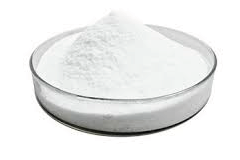
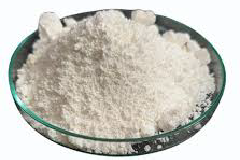
In this regard, OMC is much easier. Being a liquid, it mixes easily with other ingredients. It can help dissolve some other filters used in your formula. EHT is a white powder requiring polar emollients to remain soluble. Otherwise, crystallisation may occur at low temperatures.
However, it can be used in water-resistant sunscreens successfully. Nonetheless, it should be tested in your final formula.
Now let's move to regulatory aspects. According to Annex VI of Regulation (EC) No 1223/2009 in the EU, a maximum concentration for EHT is 5% and 10% for OMC. In the US, according to the OTC monograph, octinoxate (OMC) is allowed up to 7.5%. However, EHT is not included in the monograph and cannot be used in US OTC sunscreens at the moment.
Besides, since 2021, Hawaii has banned the sale of sunscreens containing octinoxate. The review of UV filters by regulatory authorities continues, so avoid such claims as "reef-safe" or "worldwide approved". Instead, look at the latest rules in markets where you want to sell your formula.
Choose EHT if you are interested in a high SPF and photostability of your formula and if it is allowed in the market you address.
Otherwise, go with OMC if cost and processability are your priorities. However, some companies combine both filters with others.
Neither filter wins all the time. It all depends on your priorities, budget, and market. Therefore, pay attention to all aspects mentioned above when choosing a filter.
If you also need chemical sourcing, Sarex is a one stop marketplace for highly efficient, innovative fine chemicals and textile chemicals in India.
Contact Sarex today to start your next project.
Polymer Additives 101: UV Stabilizers, Anthranilic Acid Scavengers & Flame Retardants Explained
DateSep 18, 2026
Every polymer has vulnerabilities baked into its molecular structure. Exposure to heat, oxygen, moisture, and ultraviolet radiation gradually breaks down polymer chains, leading to discolouration, brittleness, and reduced mechanical strength. Fire hazards present a separate but equally serious concern, particularly in construction materials, electrical components, and automotive parts. Additives are formulated specifically to interrupt these degradation pathways before they compromise the finished product.
...Polymers rarely perform at their best in raw form. Left unprotected, plastics degrade under sunlight, lose structural integrity over time, and can pose serious fire risks in certain applications. This is where polymer additives step in, transforming ordinary resins into materials fit for demanding, real-world conditions. Sarex works closely with manufacturers to supply additive systems that address these exact challenges, and understanding how each additive category functions can help formulators make smarter sourcing decisions. This guide breaks down three essential additive types: UV stabilisers, anthranilic acid scavengers, and flame retardants, and explains why each plays such a critical role in polymer performance.
Every polymer has vulnerabilities baked into its molecular structure. Exposure to heat, oxygen, moisture, and ultraviolet radiation gradually breaks down polymer chains, leading to discolouration, brittleness, and reduced mechanical strength. Fire hazards present a separate but equally serious concern, particularly in construction materials, electrical components, and automotive parts. Additives are formulated specifically to interrupt these degradation pathways before they compromise the finished product.
Ultraviolet light is one of the most aggressive causes of polymer degradation. When UV radiation penetrates a plastic surface, it triggers photo-oxidative reactions that break polymer chains apart, resulting in fading, cracking, and chalking over time. UV stabilisers work by absorbing this harmful radiation and converting it into harmless heat, or by neutralising the free radicals generated during UV exposure.
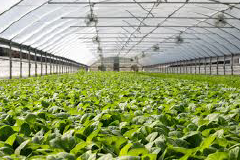
Common classes include hindered amine light stabilisers (HALS), UV absorbers, and quenchers, each acting at a different stage of the degradation process. Outdoor applications such as agricultural films, automotive exteriors, and outdoor furniture rely heavily on UV stabilisers to maintain appearance and structural performance across years of sun exposure.
While not as widely discussed as UV stabilisers, anthranilic acid derivatives play a specific role in certain polymer systems, particularly where by-products from processing or degradation reactions need to be managed. These scavenger compounds help neutralise unwanted reactive species that form during polymer processing or long-term ageing, preventing them from accelerating further breakdown or affecting colour stability. In specialty formulations where precise control over degradation chemistry matters, this additive class supports cleaner, more predictable performance over the product's lifespan.
Many polymers are inherently flammable due to their carbon-based structure. Flame retardants work by interrupting the combustion process at various stages:
Common flame retardant types include:
Industries such as construction, electronics, and transportation depend on flame-retardant additives to meet strict safety regulations. Choosing the right system requires balancing:
In practice, most polymer formulations rely on a combination of additives rather than a single solution. UV stabilisers might be paired with antioxidants for comprehensive weathering protection, while flame retardants are often combined with synergists to boost efficiency without excessive loading. Sarex supports formulators through exactly this stage, helping identify additive combinations that hold up under real production conditions rather than just laboratory testing. Getting this balance right requires both technical knowledge and access to reliable, well-tested additive systems.
UV stabilisers, anthranilic acid scavengers, and flame retardants each address distinct vulnerabilities in polymer materials, and understanding their individual mechanisms helps formulators build more durable, safer products. As applications become more demanding, from outdoor infrastructure to fire-sensitive electronics, the right additive strategy becomes a critical part of product design. Sarex brings that expertise to every formulation challenge delivering additive solutions that meet the performance demands of modern automotive manufacturing.
Read MoreWhy Triazine is better to use?
A Triazine UV absorber has excellent properties. In addition, the dosage you need to put into your polymer is usually lower compared to other UV absorbers.
What types of Triazine Product do you offer?
Triazine Exists in three Isomeric forms, we offer 1,3,5-triazine , as its being the most common and widely used Triazine isomeric form to manufacture chemical worldwide.
In which industries Triazine products can be used?
We offer Triazine product industry wise i.e., POLYMER ADDITIVE, COATING, TEXTILE INDUSTRY, PERSONAL CARE & COSMETIC, PHARMACEUTICAL INTERMEDIATES, and ELECTRONIC INDUSTRY
Why are UV Absorbers Used for Coatings?
UV absorbers improves the colour fastness and the durability of the coatings. The coated surface which is exposed to the Sun light is susceptible to degradation due to UV rays of the Sunlight. UV absorber additive in the coating protect it from the UV rays of the Sun.
What is your approach to sustainability and environmental responsibility?
We have been awarded the prestigious EcoVadis Gold Certificate, a testament to our unwavering commitment to sustainability and responsible business practices. The Gold certification shows that we take our social responsibility very seriously.
What procedure should I follow to enquire for Fine Chemical?
You can enquire by simply filling out our contact us & enquiry form. You need to mention your fine chemical related products in the message box.
What is EHS policy?
EHS policy stands for Environment, Health & Safety policy. It refer to rules & regulations to protect the health and safety of employees and the public as well as the environment from hazards associated with the workplace.
What is the quality assurance process for your fine chemicals?
We are accredited ISO 9001:2015, ISO 14001:2015, ISO 45001: 2018 for Quality, health and environment
Quality is assured by highly trained personnel of Quality assurance and Quality control department.
We have regularly calibrated quality control instruments for quality assurance. For detailed information, please refer to the PDF document available here. Download PDF
![2,4-Bis[4-(2-ethylhexyloxy)-2-hydroxyphenyl]-6 -(4-methoxyphenyl)-1,3,5-triazine (Sarasorb BEMT)](https://www.sarex.com/fine/storage/app/uploads/public/689/1ba/640/6891ba640ca97558084686.png)
![2-ethylhexyl-4-[[4,6-bis[4-(2-ethylhexoxycarbonyl)anilino]-1,3,5-triazin-2-yl]amino]benzoate (Sarasorb EHT)](https://www.sarex.com/fine/storage/app/uploads/public/689/1ba/c74/6891bac741d83995508238.png)